



Blues Lessons Course
Blues music is the foundation of contemporary western music (jazz, rock, pop, soul, funk, RnB and more). The importance of Blues music can’t be overstated. That’s why we’ve put together the Blues Style page. In these lessons you’ll learn how to play guitar in the Blues genre from top to bottom.
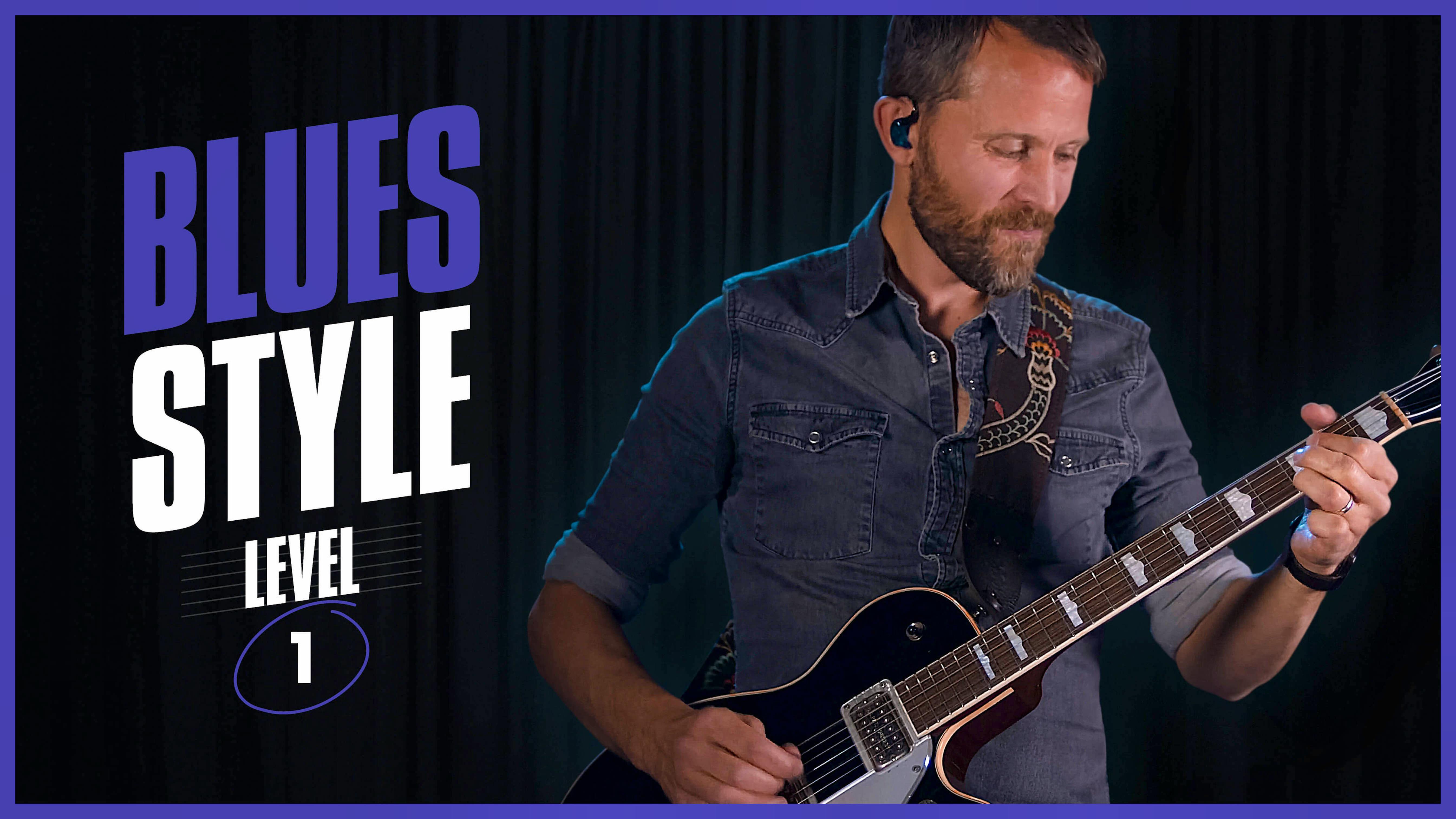
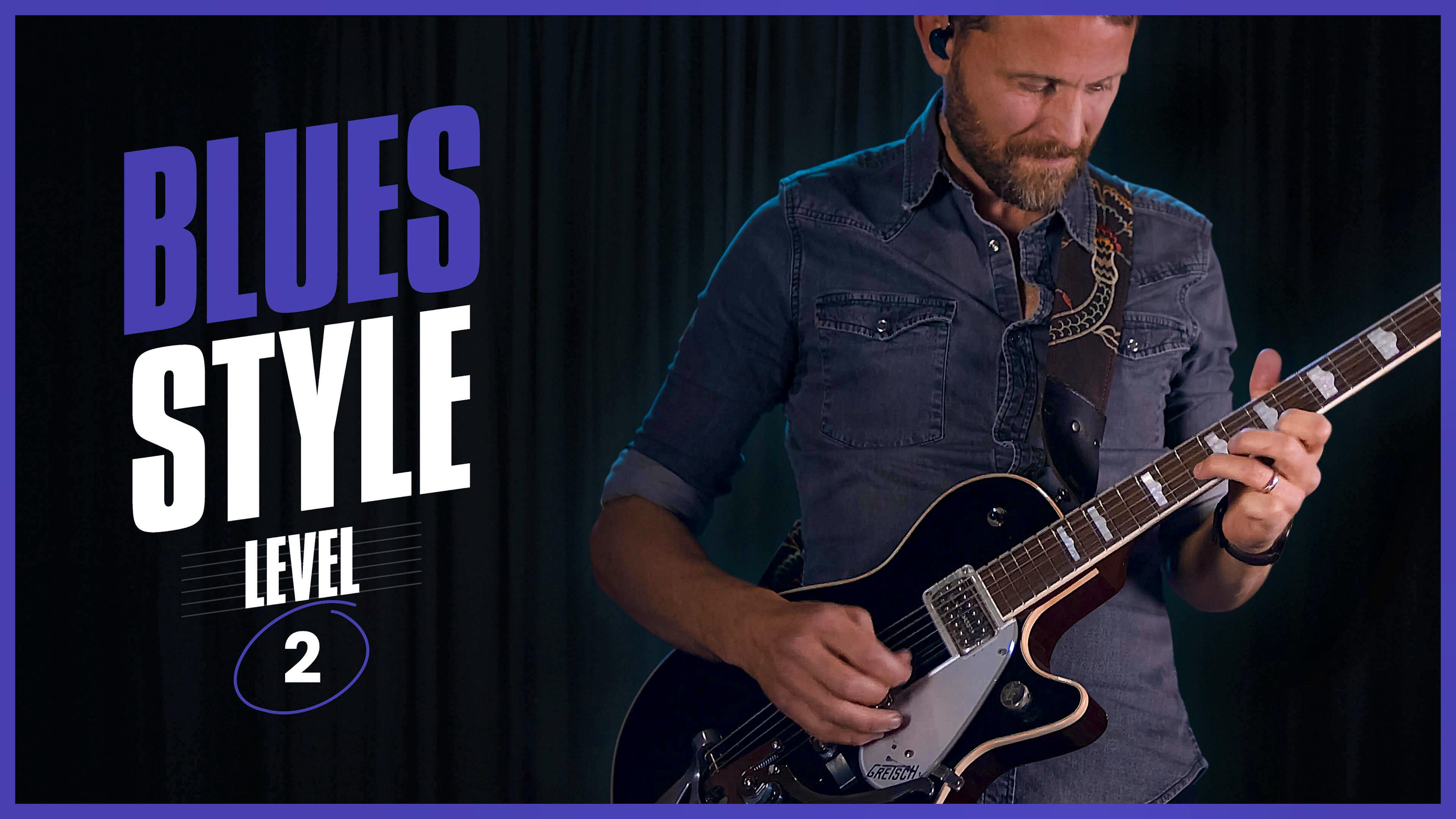
If you ever get tripped up with any of these techniques, you should definitely head to Blues Style Course 1 and Blues Style Course 2. In these courses you will be shown everything Blues guitar from fundamentals to advanced techniques in an easy to follow step-by-step curriculum. Need a refresher on the fundamentals? Check out our beginner guitar lessons for a rundown of everything you need to know to get started playing guitar.
Top Artists


Blues Rhythm Guitar Beginner Topics
In the following rhythm guitar lesson sections we will take you through the classic 12-bar blues progression using straight forward power chords and barre chords and other Blues chords.

In this tutorial we'll learn how to play 12 bar blues using barre chords. We'll get plenty of practice changing chords in time along with a 12 Bar Blues backing track while using barre chords. We'll also learn our 5th and 6th string root major and dominant 7th barre chord shapes, and learn how to lock into a bluesy rhythm by strumming with a shuffle feel. For these lessons, you can use either an electric guitar or an acoustic guitar.

In this tutorial we'll learn how to use some open dominant 7th chords to play 12 bar blues in a few different keys. We're trying to get familiar with the sound of a I-IV-V chord progression over the basic blues form of 12 measure or bars. We also want to get more comfortable with strumming in an 1/8th note triplet rhythm. That's what it means to swing and it's essential to a lot of blues style music.

In this set of beginner blues lessons, I'll teach you how to play a simple blues in E. I'll start off with the riff and the triplet shuffle rhythm in E, then move it to A. Next I'll show you how to change those chords in time, then we'll learn the B7 chord. I'll go over the 12 bar form before I show you some fills you can play to spice things up. Then we'll put everything together, and finish up with a play along.

The First Law of the Blues is the 12 Bar Blues Form. By the end of this tutorial you should understand what the 12 Bar Blues Form is and be able to play a simple example of this important idea.
Blues Rhythm Guitar Intermediate Topics
Here you’ll learn deeper concepts like rhythmic variations, strumming patterns and how to play with “feel” along with new chords.


In this tutorial we'll boost your blues rhythm playing by exploring a handful of extremely useful dominant 7 chords and combine those with a simple but powerful right hand approach. The dominant 7 chords are the ones we write out by simply adding the number 7 after the letter name. They hold a lot of bluesy tension and they're some of the most common chord type used in this style of music.

In this tutorial we'll give another boost to your blues rhythm chops by exploring a handful of extremely useful 9 chords, which is the slightly jazzier sounding chord that's used all the time in blues.

In this tutorial we'll level up our blues rhythm playing by exploring some extremely precise and punchy voicings of our dominant 7 and 9 chords. These chords are stripped down to a minimum number of notes for a maximum impact, and they're often referred to as shell voicings. These little clusters really cut through the mix and only take up a minimum amount of space in the sonic picture, which is particularly useful when there's a lot going on in the music and you're having a hard time finding a place to sit in the mix.

In this tutorial we'll explore some more stripped down, precision chords that use a minimum number of notes for a maximum impact or shell voicings as they're often called. Not only are the chords boiled down to the essence, the movement between the I, IV and V chord voicings is also optimized, so each of the notes within the chords move as little as possible. This gives our rhythm playing a very deliberate and mature sound. There is some theory involved in this, but you don't have to understand the theory to use this approach - just use your ears to determine how little you can get away with playing.

In this tutorial we'll learn a classic bluesy diad riff that's a solid part of every blues player's vocabulary. We'll break the riff down step by step and learn to apply it to a 12 bar blues form with some rhythmic and phrasing variations to get more mileage out of it. Finally we'll play it along with backing tracks at two different tempos to get a lot of practice at applying the riff.
Blues Rhythm Guitar Advanced Topics
Learn advanced Blues rhythm guitar techniques like walking basslines, turnaround variations and combining bass lines with harmony chords and upper melodies.

Christopher will show you a new way to play a blues arrangement for solo guitar. This involves combining a bass line with middle chord tones as well as upper chord tones. In this way we get a very full sound and suggest three separate voices or things happening at once!

Christopher will show a new way to play a blues type arrangement for solo guitar. We'll move the standard boogie diad pattern up an octave to have motion in the upper register while making the bass notes more static.

Christopher will show you how to move the familiar pattern of the earlier solo guitar blues orchestration tutorials to any fretboard position by barring with the index finger and using it as a sort of movable capo. These new options will give us new skills and tools to play more varieties of blues type patterns!

Christopher will show you new ways to play a blues type arrangement for solo guitar. To orchestrate means to put many parts together. In this tutorial we'll combine a walking bass line with upper chord tones. The end result is two parts playing together at the same time. We'll also add a variety of classic blues walking bass lines.

Christopher will show you new ways to play a blues type arrangement for solo guitar. To orchestrate means to put many parts together. In this tutorial we'll combine a walking bass line with upper chord tones. The end result is two parts playing together at the same time. We'll also add a variety of classic blues turnarounds.

Christopher will show you how to play a blues type arrangement for solo guitar. To orchestrate means to put many parts together. In this tutorial we'll combine a walking bass line with upper chord tones. The end result is two parts playing together at the same time.
Blues Lead Guitar Beginner Basic Vocabulary
The following sections is all about how to play lead Blues guitar. We’ll show you everything from the basics including Blues scale guitar lessons and easy beginner blues riffs and licks.

Christopher will show you some basic blues licks that form the foundation of blues soloing vocabulary. This includes the following characteristics of blues lead playing: using the blues scale (minor pentatonic scale with flat 5th "blue note"), triplet swing phrasing, dynamics and articulations like sliding and bending. This is essentially a primer on playing single note melody lines in a blues style to start building a repertoire of blues licks.

Christopher will show you some basic blues licks that form the foundation of blues soloing vocabulary. This includes the following characteristics of blues lead playing: using the blues scale (minor pentatonic scale with flat 5th "blue note"), triplet swing phrasing, dynamics and articulations like sliding and bending. This is essentially a primer on playing single note melody lines in a blues style to start building a repertoire of blues licks.

Christopher will show you some basic blues licks that form the foundation of blues soloing vocabulary. This includes the following characteristics of blues lead playing: using the blues scale (minor pentatonic scale with flat 5th "blue note"), triplet swing phrasing, dynamics and articulations like sliding and bending. This is essentially a primer on playing single note melody lines in a blues style to start building a repertoire of blues licks.

Learning to switch between the wide strumming of a whole chord and the smaller motions of playing one string or note at a time is an important skill to develop. In this tutorial we'll use a simple blues rhythm and some fills as an exercise to learn that technique!

By the end of this tutorial, you should be able to play a basic 12 bar blues using simple open chords and combine it with simple lead fills by alternating between the rhythm chords and single note lead fills.

Learning to switch between the wide strumming of a whole chord and the smaller motions of playing one string or note at a time is an important skill to develop. In this tutorial we will learn to play a basic 12 bar blues using simple open chords and combine it with simple lead fills by alternating between the rhythm chords and single note lead fills.
Blues Lead Guitar Intermediate Vocabulary Building
Continuing through intermediate lead Blues guitar techniques, you'll learn tips on vibrato, bending and a plethora of licks.

In this tutorial we will learn to play a lead fill that uses double stops in a basic 12 bar blues in C major. This is an important step in developing a style that combines and alternates between a blues rhythm riff and a beginner lead fill.

Christopher will show you a basic 12 bar blues in B major in an early rock and roll style that combines and alternates between power chords and basic, beginner lead fills.

Christopher will show you how to really spice up your blues rhythm and lead playing with some interesting chord progressions, chord voicings and lead licks! First we'll look at a chord progression that's not the standard 12 bar form. Next we'll add some extended chord voicings. Next, we'll add some licks that are more chord tone based than standard pentatonic. Finally, we'll put them all together in some play alongs to practice these new ideas.

In this set of lessons, I'll teach you a "bread and butter" blues lick that you can use in almost any blues solo. I'll start with an introduction to the lick, then how to do the tricking picking and bending. The we'll play the lick using the IV and V chords, then we'll review the whole 12 bar form before we do two play alongs in different tempos. Next we'll look at straight 8th rhythm, and finish up with two more play alongs.

In this next set of lessons on bread and butter blues licks, I'll teach you a major pentatonic lick. I'll introduce you to the concepts and lessons and show you the basis of the lick, then how to apply the picking and bending. We'll then play the lick over the IV and V chords, then add some variation. We'll do play alongs in two different tempos before we examine the lick in a straight 8th rhythm. We'll conclude with 2 more play alongs.

Bread & butter means the central or fundamental part of a thing. It also means how you earning a living; how you earn you bread to pay for your bread & butter! In this tutorial we'll learn another, more advanced major pentatonic lick that you've heard many times.

In this set of lessons, Ry Kihn will teaching you how to play major and minor pentatonic scales in a solo. Ry will introduce you to the tutorial, then examine major pentatonic licks. In the next lesson, we'll be learning how to switch between these scales; then Ry will take a look at the extended major scale with the flat third, making things bluesy. To conclude, we'll put it all together and play with a custom backing track.
Blues Lead Guitar Advanced Topics
Continue with advanced lessons covering major notes in the minor Pentatonic scale as well as the 12-bar form in all 12 keys and concepts like ‘less-is-more.’

In this tutorial we will learn to play a basic 12 bar blues in G major in a style that combines and alternates between a blues rhythm riff and a lead fill. We'll learn two different turnarounds, use an applied dominant chord and add a bluesy ending lick!

Christopher will show you how to really spice up your blues rhythm and lead playing with some interesting chord progressions and lead licks! We'll take a complex blues chord progression and learn some next level licks that build on the previous tutorial in this series. We'll put them all together in some play alongs to practice these new ideas.

Christopher will show you how to really spice up your blues rhythm and lead playing with some interesting chord progressions, chord voicings and lead licks! This time we're going to use the 12 bar blues form as a standard, but add more chords to the progression. Next, we'll add some lead licks to play over our new chord progression. Finally, we'll put it all together in some play alongs to practice these new ideas.

In this third tutorial of the series we will focus only on targeting chord tones in order to learn more ways to spice up the minor pentatonic "box" blues shape with notes from the major scales. The lessons in this series are based on a lot of the ideas we already learned in the previous tutorials from the series on "Major Notes in Pentatonic Minor". For these example exercises we will use the A minor pentatonic scale and a 12 bar blues form in A major.

In this tutorial we will learn to spice up the minor pentatonic "box" blues shape with notes from the major scale. For these example exercises we will use the A minor pentatonic scale and a 12 bar blues form in A major. The central idea is to use the pentatonic box as a visual reference while targeting chord tones. The lessons in this series are based on a lot of the ideas we already learned in the previous tutorials in the series "Major Notes in Pentatonic Minor".

Christopher will show you how to really spice up your blues lead playing with these advanced licks! First we'll look at the basic pentatonic minor box as scale degrees. Then we'll do the same for the mixolydian mode. Then we'll start building licks from combining those two scales and play them over the changes of a 12 bar blues in A.

In this tutorial I've created a 12 bar blues backing track in every key and at two tempos (80 BPM and 120 BPM). I play each blues with a different rhythm guitar and lead guitar approach to show how much variation is possible within the 12 bar blues form. This is a valuable way to get used to playing in every key and comfortable with playing anywhere on the fretboard.

In this tutorial we will learn to spice up the minor pentatonic "box" blues shape with notes from the major scale. For these example exercises we will use the A minor pentatonic scale and a 12 bar blues form in A major. The central idea is to use the pentatonic box as a visual reference while targeting chord tones. The lessons in this series are based on a lot of the ideas we already learned in the previous tutorial "Major Notes in Pentatonic Minor".

Christopher will show you how to spice up your blues licks by adding major scales notes to the minor pentatonic "box" blues shapes. For these example exercises we will use the A minor pentatonic scale and a 12 bar blues form in A major. The central idea is to use the pentatonic box as a visual reference while targeting chord tones.
Blues Musicianship
In Blues music there are ‘intangibles’ that aren’t written on sheet music. Things like feel and groove or musicianship and playing with others will be best developed through real-world experience. But we'll show you how to get there.

In this tutorial we'll zoom out and look at the big picture of blues musicianship: improvisation, using backing tracks, playing live, and writing music. These aren't playing lessons per se, although we use a couple of backing tracks for demonstration; these lessons are intended for you to step backk and take a look at the big picture, and put your playing into a context.

Christopher will show you how to build a blues arrangement. We'll use various rhythm and lead guitar techniques and combine them in a dramatic way to build and release tension over the course of many repeated passes at a 12 bar blues form. We'll experiment with loud & quiet dynamic levels, various approaches to alternating rhythm and lead guitar parts.

In this tutorial we will learn to build another blues guitar arrangement. We'll use various rhythm and lead guitar techniques and combine them in a dramatic way to build and release tension over the course of many repeated passes at a 12 bar blues form. We'll experiment with loud & quiet dynamic levels, various approaches to alternating rhythm and lead guitar parts.

In this tutorial we will learn and play an 8 bar blues. We'll use a classic ascending chord progression, then add some circle of fifths motion to give it a slightly R&B or jazzy sound. We'll also learn some classic bluesy licks to play over the progression following the chord changes.

In this tutorial we'll learn a 16 bar blues in C. We'll play rhythm and lead guitar parts. We'll also use some jazzy elements to spice up the turnaround.

Christopher will show you how to turn the old Christmas standard tune "Jingle Bells" into a swinging blues tune with a harmonized diad melody, some fun bluesy licks for a solo and a rocking rhythm guitar.
Blues Special Topics
Learn some special Blues techniques like different sub-genres, fingerstyle tips, and slow tempos.


In these lessons you'll learn some ideas about how to play an orchestral slow blues and solo licks in the key of E. We'll work on some rhythm ideas, talk about timing, sound and feeling, and good combinations of solo licks. Last, we'll put these elements together as we play through this slow blues progression.

In this tutorial you'll learn to play a minor blues with some rock elements, and you'll learn to play dynamically by using specific sound settings and playing techniques to create feeling. We'll talk about sound and tone, then look at the chords. The next four lessons will focus on licks you can play over the minor blues progression, and in the final lesson we'll put it all together and play through the whole song.

In this set of lessons I'll teach you a short simple original song, "Arizona Blues". I'll introduce the tune to you, then show you how to play the two main parts. Next I'll put the two parts together for you, then get into the hammer-on and bluesy licks. I'll play the song through for you, then finish by explaining a bit of my philosophy behind it.

In "Bad Blues 2", I'll teach you to play a theme I composed. I'll talk a bit about the theme, then show you a vibrato exercise. In lesson 3 I'll show you the first part, using the vibrato. In the next lessons I'll show you parts 2 and 3 and how you can create variations. To conclude I'll put it all together and play the theme for you.

"Bad Blues" will give you some ideas on how to play blues in a rubato style - without real timing. This gives you freedom to play blues with full expression and dynamics. I'll teach picking technique, then show you several licks to play. I also talk about sound settings, because they are also part of your dynamic expression.

In this set of lessons I'll give you some ideas for playing the blues with a drop D tuning and a bottleneck. I'll cover the drop D tuning, talk about the basic technique, then get into some chords. Then I'll teach some melodic ideas and groove examples, and give you a summary of ideas to create an entire tune.
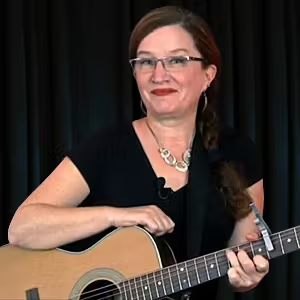

Jorma Kaukonen started here. Taj Mahal, and Keb' Mo' too, plus dozens of other acoustic blues masters. Even if you're new to fingerpicking, this tutorial will walk you step-by-step through learning to play the fingerstyle blues, and load you up with an impressive collection of tricks and riffs you can toss in at any time. You'll even learn to write your own blues song!

In this tutorial we will learn 3 whammy bar tricks to spice up your blues playing technique.
Blues Artist Studies
The best way to learn how to play Blues guitar is by studying the greats. Check out these artist studies to learn to play like the legends themselves.

In this tutorial we'll explore a practice tune written in the signature high energy blues-rock style of Joe Bonamassa. This is a fun style to play because it draws from a variety of different blues sounds and combines it with high gain and rock elements. We'll start out with a slow blues, then break into a super fun rock riff and in the middle we'll have an intense and epic solo section.
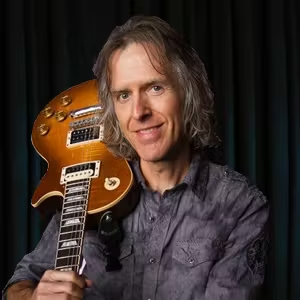

Dave breaks down Stevie Ray Vaughan's style into several key factors, showing you what makes it special, and then teaching you to play some licks in his style!
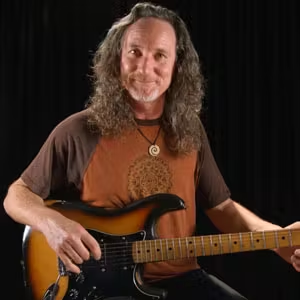

Tome will show you essential aspects of Guy's playing style and music across many decades has inspired players to learn about the blues of the past, bring those traditions to the present and expand on them into the future! Through his playing and showmanship, he directly influenced the early rock legends of the 60s. Clapton, Page, Beck & Hendrix all took a cue & a few licks from Buddy Guy!

In this tutorial we'll study the electric guitar playing style made famous by John Mayer. This style is defined by a blend of blues, R&B (rhythm and blues), pop and rock influences, soulful feel, and expressive playing. We'll explore the techniques used to create this iconic sound, from the smooth, vocal-like bending to the masterful use of dynamics and articulation. We'll break it it down into several key factors, learn what makes it special, and then learn to play riffs and licks in the style along with backing tracks.
Blues Gear & Tone
These gear and tone lesson topics will help you sound like a true Blues guitar legend.


There are many different kinds of amplifiers to choose from. These are 3 primary amp styles on which most models are based, and here we'll look at 2 tube amps and a solid state amp. Use this demonstration by a pro to get a good idea of what kind of amp best suits your style.

In this tutorial we'll answer questions about the tonal differences between using your fingers instead of a pick. We'll also look at the bottleneck slide, then how to use a capo. All these are important components of getting great blues tone and style.

In this tutorial we'll walk you through the sounds and electronic configurations available on the most popular guitars in the market: semi-hollow body, Les Paul, SG, Telecaster, and more. You will have a great idea of what guitar will give you the sound you want, to become the blues player you want to be.

These non-playing lessons will do a side-by-side comparison of guitar tones, amp tones, and the difference in tones created by the most common effects used by blues guitarists. We'll look at several tone configurations to give a good overview of the variety of choices available to get killer blues tone.

This tutorial will give you the know-how to identify and put together great gear to get the tone you want. With these lessons, we hope to take away some of the work it takes to find the right effects and make the most of your hard-earned dollars. We'll look at overdrive, distortion, tremolo, delay, wah, fuzz, and vibe pedal.
Essential Blues Songs
Here at Guitar Tricks we understand the value of Blues music across the musical landscape as well as on the guitar itself. When learning an artform such as Blues guitar, knowing the ‘why’ is just as important as knowing the how. Blues guitar is renown for having some of the best guitar players in history playing the style including Stevie Ray Vaughan, Eric Clapton and B.B.King. Take a look at some of the songs which truly highlight why these guitarists have earned the title of ‘Blues masters.’

We've arranged this 12 bar blues classic in a made easy format for acoustic guitar with simplified chords and strumming. If you're up for a challenge, we've also included a bonus lesson to learn how to play the song with a boogie diad approach. This song uses open 7th chords, the 12 bar blues form, and a steady strumming pattern.

In this tutorial Tom will show you the guitar parts to this iconic blues tune. You'll learn the tasty call and response guitar parts for the intro, verse 1, verse 2, & verse 3. The song is in the key of A-flat and is in 12/8 with a quarter note of 75BPM. Let's get started!

In this blues song tutorial, Anders Mouridsen will be breaking down the song "Boom Boom", by John Lee Hooker. First we'll talk a bit about the gear and getting the darker, "muffled" tone, then we'll pick apart the main riff and talk about John Lee's unique right hand technique. There's a lot of "free" jamming and soloing in this song, and Anders will break all that down for you. To close, we'll do a full play along performance, and then mute the guitars to you can jam along on your own.

In this song tutorial, Henrik Linde will teach "Baby, Please Don't Go", as made famous by Muddy Waters. Henrik will open with a song introduction and a look at the gear and tone, then launch in with the main guitar lick that plays off the vocals. Next up is the short but sweet solo, then the rhythm guitar part that's underneath the solo. We'll do full and single guitar performances, then you'll take over in the jam along.

Anders will teach you the iconic blues-rock song "Mary Had A Little Lamb", as made famous by Stevie Ray Vaughan. This is a really fun song, packed with classic SRV blues/rock vocabulary, and even though this song is somewhat short and concise, there's rhythm and lead material enough in it to last you a lifetime. This song is performed as a "power trio" meaning the guitar only has bass and drums backing it up, and it's the perfect exercise in seamless switching between rhythm and lead playing as well as strumming and single note picking.

Tom will show you the basic rhythm guitar parts as well as short solos in the style of three great players: BB King, Eric Clapton and Stevie Ray Vaughan.


Caren will show you a made easy arrangement of this Robert Johnson classic based on a version by Eric Clapton. The 12 bar blues form is fundamental to the genre, and has been used repeatedly for countless songs.
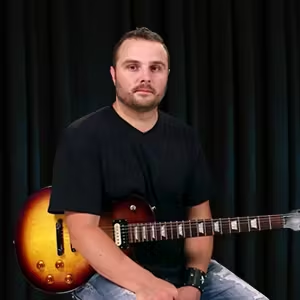

In this tutorial, Tony Lee will teach "Still Got the Blues", by Gary Moore. Tony will introduce the song then talk about gear and tone before launching into the clean rhythm parts: intro, chorus, verse, bridge, and the parts under the solos. Then it's on to the lead parts (guitar 2): the fills in the intro, verse, and bridge, then all the epic soloing. We'll conclude with a full performance, then do 2 jam alongs.
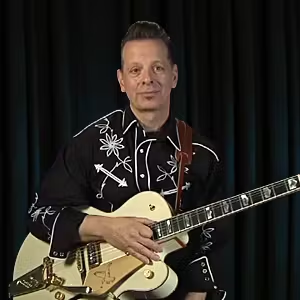

In this set of lessons, Jinx Jones will teach "Bright Lights, Big City", as made famous by Jimmy Reed. We'll look at the 12 bar blues progression after a song introduction and the gear and tone; then learn the song intro. The verse rhythm guitar comes next, and an alternate verse rhythm. We'll adapt the harmonica solo to guitar, then do full and single guitar performances and a jam along.

Before You Accuse me was written in 1958 by Elias McDaniel (also known as Bo Diddley). In this tutorial, we take a gander at an acoustic version of the song made famous by Eric Clapton, focusing on right hand fingering techniques, the middle and outro solos, the rhythm guitar parts, then lay it all down to a backing track.

Mike will show you killer blues licks in BB's distinctive style, a swinging blues feel, and playing in call and response in the 12 bar blues form.

Tom will show you both guitars in this iconic blues tune, including the verses and the solo.

In this tutorial you'll learn how to play the classic blues song as made famous by the one and only Muddy Waters. This song is an absolute blues classic and it's been covered by pretty much any blues artist to ever walk this earth. It's also very much a part of the "standard" blues repertoire that every blues player is expected to know.

"The Sky Is Crying" is a widely-covered blues standard; in this tutorial we're going to take a look at Stevie Ray Vaughan's powerful version of the song. We'll break down some key elements in his playing style, take you through some tricky spots, and finally play through the whole song "note for note". Take anything you like from this blues classic and use it in your own playing!

In this tutorial Tom will show you the guitar parts to this iconic blues tune. You'll learn the swinging groove that forms the verses and the outro. The song is in the key of E and is 4/4 time with a quarter note of 110BPM.

In this blues tutorial, Anders Mouridsen will teach you "Smokestack Lightning", by Howlin' Wolf. This is a one-chord blues based around a repeating riff, and after an overview of the song and talking about the gear and tones Anders will break down that main riff. Next up will be the supporting rhythmic line that's played along with the riff; then you'll learn some variations to the main riff. We'll cap it all off with a play along, then you take over in the jam along.

Tom will show you all the parts to this classic blues tune: the intro, the melody, the sax solo comping and the verse comping.

Tom will show you how the guitar weaves super tasty lines and occasional chords between and around the vocals to create an exciting and dynamic arrangement of a simple form!
FAQ
What type of guitar is best for blues? Playing the Blues is all about feeling, so any guitar that is playable is great. Most early Blues greats only played acoustic guitars. But single-coil or humbucking, any guitar that enables you to express yourself is the best for playing the Blues.
What makes a guitar a blues guitar? It's all about that soulful, expressive sound, often achieved with single-coil pickups.
Is blues guitar easy? Blues guitar starts off simple, making it a good starting point for anyone learning how to play guitar. But it will get complex as you dive deeper, so advanced guitarists can keep with the lessons for a long time.
Which is harder blues or jazz? Jazz is typically harder than blues due to more complex song structures, leading to more theoretical improvisation.
Which guitar is hardest to play? Classical guitars can be tough for beginners due to their wider fretboards.
Which guitar style is easiest? Blues guitar is a great way to get started learning to play guitar. It’s universal song forms make the style accessible to beginner guitarists.
What's the easiest instrument to play? Guitar is probably the easiest instrument to play. Once you know 3-4 open chords, you’ll be able to play hundreds of songs.
What genre is easiest to play on guitar? The Blues genre, while steeped in history and nuance, is very straightforward to pick up with beginner concepts.
Should you learn blues guitar first? Absolutely, it's a solid base that introduces fundamental guitar techniques and feel.
Need Extra Help with your playing?
Book A Private Lesson
Schedule a 30 or 60 minute lesson with a coach who can offer advice and guidance to improve your playing.

Request A Custom Lesson Plan
Whether you’re just starting to play or returning from a long break, a guided practice plan can get you to where you want to be sooner.